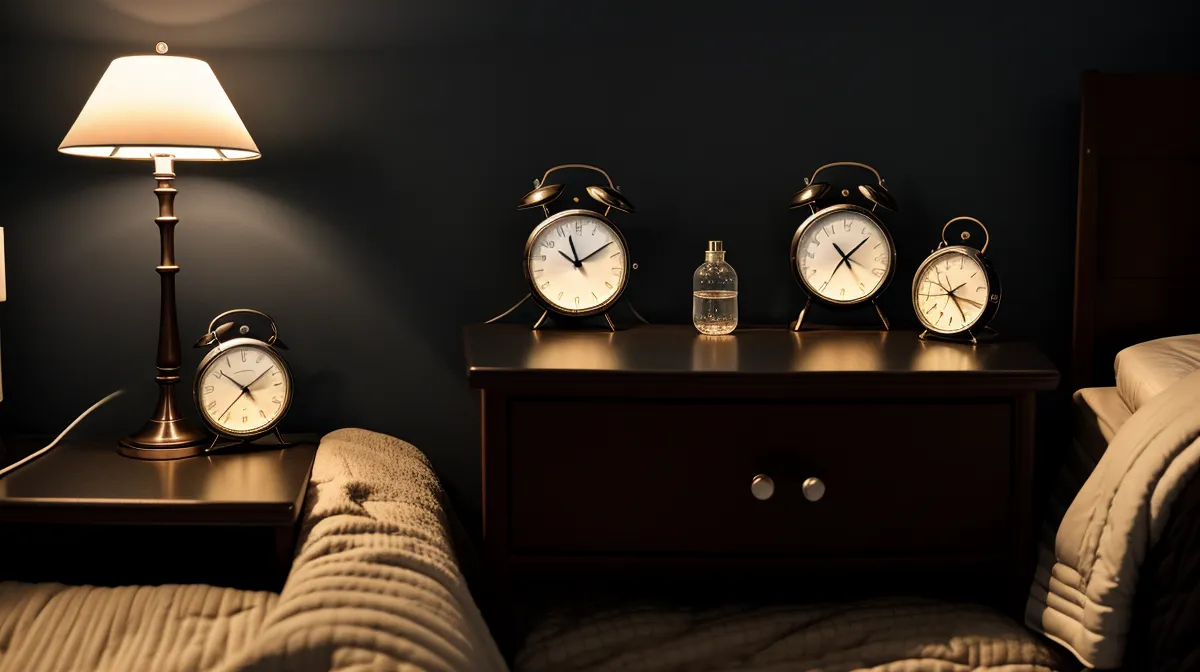
Six non-melatonin sleep aids made it into steady rotation for me this year, which either shows real dedication or a minor household problem, depending on which one of us you ask. The interesting part was never which one knocked me out fastest — it was which ones let me wake up without the morning grogginess that used to eat the first two hours of my day. Choosing melatonin-free sleep supplements, I've learned, comes down to running an actual filter on what you buy, not just grabbing whatever's stocked next to the melatonin at the drugstore.
I used to be the guy at work bragging about running on four hours of sleep like it was a personality trait, so it's a little ridiculous now that a doctor's warning about my cortisol numbers is the reason I own more supplement bottles than a hardware store owns screws. That's roughly the same filter I'd apply to any vendor as an operations manager, and it applies just as well to your own body: don't just check that the system ran, check what it cost you to run it.
The short version of how I ended up needing a filter at all — two weeks on ZzzQuil, until the idea of needing an over-the-counter antihistamine every night just to fall asleep started making me nervous enough to look elsewhere. It worked, technically, unconscious within twenty minutes most nights, but "technically worked" is a low bar when the actual goal is functioning the next morning, not just closing your eyes for eight hours.
The Real Filter: Duration Versus How You Actually Feel
Most melatonin-free options get judged on the wrong axis. People ask how fast something puts you under, when the number that matters more is what the next morning looks like. Two years of comparing notes against a tracker has taught me that duration and quality get graded on completely different curves — you can hit a full eight hours and still fail the part of the test nobody's grading, which is whether you're actually sharp by nine. I still think about the bigger picture the way I'd think about a chronic backlog at work: you can't sprint your way out of months of accumulated sleep debt with any single pill, and that's a much bigger conversation than a buyer's checklist can hold, so I'll leave it there. What a tracker spits out afterward — a score, a recovery number, some vague readiness percentage — is at least a rough proxy for whether you traded one problem for another, and it's the first thing I look at now before deciding anything else.

What Actually Belongs on a Melatonin-Free Checklist?
Read the label like you're checking for something someone's trying to hide, because sometimes they are. Plenty of "natural sleep support" blends bury a small dose of melatonin inside a proprietary mix so it never has to appear on its own line — a narrower habit than reading labels in general, but one that's saved me from buying the exact ingredient I was trying to get away from, more than once.
Next, check whether an ingredient has any track record of tolerance or dependence with nightly use, since something you might take most nights for months needs to clear a different bar than something you'd reach for during one bad week — that distinction deserves a longer conversation than I'll give it here, but as a checklist item it's non-negotiable for me now. And if what you actually want is a ranked list sorted by how alert you feel the next morning instead of by how fast something puts you out, that's a separate rabbit hole I've already gone down elsewhere; here I just want the filter, not the whole spreadsheet.
Waking at 3 AM specifically is its own category, worth separating from the general "trouble falling asleep" problem, because the fix usually isn't the same fix. I broke that comparison down in more detail in Magnesium vs Melatonin, if that's your specific pattern rather than the getting-to-sleep part.
Trade the Sedative Logic for a Support Logic
Once you're off anything that just forces the lights out, the category shifts toward minerals and amino acids that support the process instead of overriding it, and magnesium is usually the first stop. It comes in more forms than most people realize, and picking the wrong one mostly just cost me a few uncomfortable mornings before I found one that agreed with me — the full comparison of forms, including how a given magnesium's bioavailability actually plays out, is its own writeup rather than a paragraph here. A guy from a local wellness forum, Barrington, could talk circles around me on the chemistry side of all this but rarely does unless you push him on it — when I first showed him my shortlist, he just said to cross off anything that sedates before I even looked at what supports, and let me work out the rest on my own.
L-theanine did something different for me than magnesium did — it didn't sedate so much as it turned the volume down on the mental replay of tomorrow's problems, which is its own bottleneck if racing thoughts rather than physical restlessness are what keep you up. Some of that gets pinned on alpha wave activity in the research, though I'll leave the mechanism to people more qualified than a guy with a smartwatch and an opinion. What I can say is it works alongside your body's normal stress response instead of overriding it, which is a gentler proposition than anything that just flips a switch.
The Proof That Isn't on the Watch
The clearest sign for me wasn't the soft buzz against my wrist handing over a score before my eyes were even fully open. It was pulling up near the Dunkin on my regular commute and realizing I hadn't even glanced at it, no craving, no quiet negotiation about whether I had time to swing in. That's a strange way to grade a sleep supplement, but it's more honest than a score, because a score can be flattered by one lucky night and that can't. I get a similar read on weekend mornings walking the dog around Duluth Town Green in Gwinnett County. There's a version of me that used to need real convincing before that walk felt possible, and a version that doesn't anymore, and the gap between those two is the actual point of this whole exercise.
None of this holds up without tracking it, though. A gut feeling about "feeling better" is exactly the soft metric that gets you fooled by one good week. I know a guy, Jerome, from an online community for people who take sleep tracking a little too seriously, who runs a Google Sheet so color-coded it would make our finance department jealous — I'm nowhere near that organized, but the underlying logic is right: write it down, or you're just guessing which supplement actually did anything.
Picking Your Own Path Without Guessing
If you want to see how all of this shakes out against a specific shortlist, I put together a rundown in Best Melatonin Free Deep Sleep Supplements for Men Over 40, built around my own demographic and where I started from. But the short version doesn't require reading anything else: cross off anything whose entire pitch is knocking you unconscious, keep whatever's left that's aimed at calm instead of sedation, and give it more than one lucky night before you trust the result.
My cabinet still looks like a supplement store had a clearance sale, and my wife still isn't shy about pointing that out. But the "didn't work" shelf is bigger than the "still using" shelf now, and that's exactly how the filter is supposed to work — you're not looking for one perfect answer, you're looking for the process that keeps telling you the truth about your own mornings.