
My cortisol chart and my wife's don't have to look anything alike, even though we sleep in the same room, deal with the same daily grind, and turn the lights off within minutes of each other most nights. Hers dips in the evening and stays down. Mine spikes late, refuses to fully drop, and drags the whole night sideways behind it. That gap, not some new interest in biology, is the entire reason cortisol management turned into an actual project for me instead of a passing worry, because natural supplements on their own never closed it, and I got tired of guessing which one might.
This isn't a men's health confession with a symptom list. It's the structured version I wish someone had handed me instead: what actually moves the needle, in the order it's worth trying, not the order a supplement label suggests. A reader named Cynthia emailed after my first article ever went up, asking the same question her own doctor had left her with — elevated cortisol, and now what — and she works in hospital administration, so vague reassurance was never going to cut it. This is the version I owe her, laid out plainly instead of buried in a story.
The Difference Between a Calm Nervous System and Just Being Exhausted
Exhausted and calm are not the same state, though they feel similar enough that most people conflate them. Being wiped out just means you've used energy for the day; a nervous system stuck in overdrive means your body hasn't gotten the signal that the day is actually over, no matter how tired you feel. The link between elevated evening cortisol and that specific wired-but-drained feeling is well documented, and I've gone deeper on that mechanism in another piece — but the practical version is simpler: if you're bone-tired and still can't settle, the problem usually isn't a lack of rest. It's an input you haven't turned off yet.

Cut the Inputs Before You Add Anything
Start with what's still active in your system by the time you're trying to sleep, not with what's missing from it. Work email checked right up until lights-out keeps your brain in problem-solving mode long after your body wants to shut down, and that's the first thing I audit with anyone who asks, before magnesium or melatonin ever come up. Caffeine timing matters too, though the dependency loop underneath it — reaching for a cup to fix what a bad night already did to you — is really its own separate habit worth breaking on its own terms. Once the obvious inputs are handled, testing whether a specific supplement is actually doing anything is a separate exercise, and I've laid out my tracking notes on how I verified if supplements were actually working elsewhere — worth doing before you credit or blame any single product for a change in your sleep.
Evening Exercise Doesn't Wreck Your Cortisol
Standard advice says skip intense exercise late in the day because it raises cortisol along with your core temperature. I followed that rule for a long stretch and mostly just sat on the couch feeling more wound up, not less. What actually worked, at least for me, was closer to the opposite — real physical exertion in the early evening instead of passive winding-down. I'm not going to pretend I understand the full reasoning behind it, because I'm not qualified to, but the pattern held up often enough on my own tracking that I stopped assuming the standard advice applied to everyone equally. If you have any heart or blood pressure concerns, that's a conversation for your own doctor before you test this — not something a supplement label can answer for you.
Building a Wind-Down Sequence That Actually Holds Up
A wind-down sequence only works if it's boring and repeatable, not elaborate — mine failed for months because I kept swapping in new gadgets instead of keeping the sequence itself consistent. A weighted blanket someone recommended just left me sweaty instead of sleepy, and I dropped it within a week; the actual fix wasn't a better product, it was doing the same three or four low-stimulation things in the same order every night until my body stopped waiting to see what came next. For deep sleep specifically, I also ran a longer test on one particular supplement and wrote up the extended version in Resurge Review: My Experience Using This Supplement for Deep Sleep, though no single bottle ever replaced that consistent sequence. Racing thoughts at lights-out are a related but distinct problem worth naming separately, since the fix for a mind that won't stop working isn't identical to the fix for cortisol that won't come down.
When Sleep Data Doesn't Match How You Feel
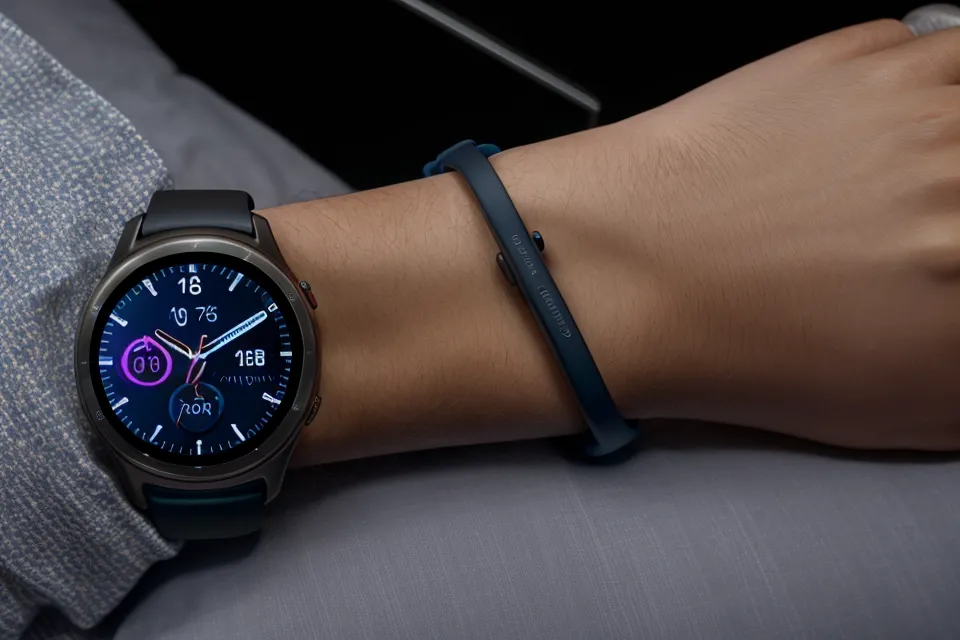
Some nights the data and the body disagree, and that's when I call Russell Thigpen, an old colleague who still trades notes with me on anything that looks like an operations problem — sleep charts included. He's usually the one who spots the pattern I'm too close to see, and there was one morning I stopped scrolling past the sleep summary and actually stared at it — seventy-one minutes of deep sleep logged, more than I'd seen in a long stretch — because for once the number matched how rested I actually felt.
Smartwatch "stress" scores are a heart-rate-variability proxy, not an actual cortisol reading, and mixing the two up is an easy way to misread your own data — I've picked that distinction apart in more detail in my notes on what 18 Months of supplement testing taught my smartwatch. Waking at the same hour every night, especially somewhere around three in the morning, is its own separate pattern with its own explanations, worth treating as a distinct problem rather than folding it into general cortisol management.
The One Rule That Replaces Every Supplement Aisle Decision
None of this works as a patch on top of long-term sleep debt — a deficit built up over years doesn't clear itself because one night finally goes well, and treating it that way is how people end up disappointed by an otherwise reasonable supplement. If you do end up shopping for something, check whether it actually clears the non-habit-forming threshold before you buy, since that detail gets buried under marketing copy more often than it should. Magnesium is a reasonable place to look, but the form matters — glycinate has behaved differently for me than the cheaper stuff, though that comparison deserves its own space rather than a paragraph here. Melatonin comes with its own grogginess trade-off, one I've written about separately for anyone weighing that specific trade. The rule I actually use, every time, is simpler than any of it: find the loudest active stress input before you add a single bottle to the cabinet. Auditing what's demanding your nervous system's attention will tell you more than any ranked list of supplements ever could.