
A swallowed capsule and an inhaled scent don't run on the same clock — one has to clear your stomach before it does anything, the other reaches your brain before you've finished the breath. That gap is the reason my nightstand full of magnesium and L-theanine kept underperforming no matter how carefully I dosed it, and it's the reason lavender oil ended up filling a different role in my nighttime routine than any capsule could. This isn't a swap-one-for-the-other story. It's about running aromatherapy and sleep supplements on two separate timers instead of asking one pill to do a scent's job.
For years I was proud of running on next to nothing. I was the guy who treated eight hours of sleep like a luxury tax other people paid and I didn't. That math finally caught up with me, which is a big part of why I now own enough supplement bottles to make a pharmacist raise an eyebrow. None of that explains why a bottle of lavender oil ended up mattering more than half my stack, though. It mattered because of timing, not because it's somehow stronger than anything else on the shelf.
Two Delivery Systems, Two Different Timelines
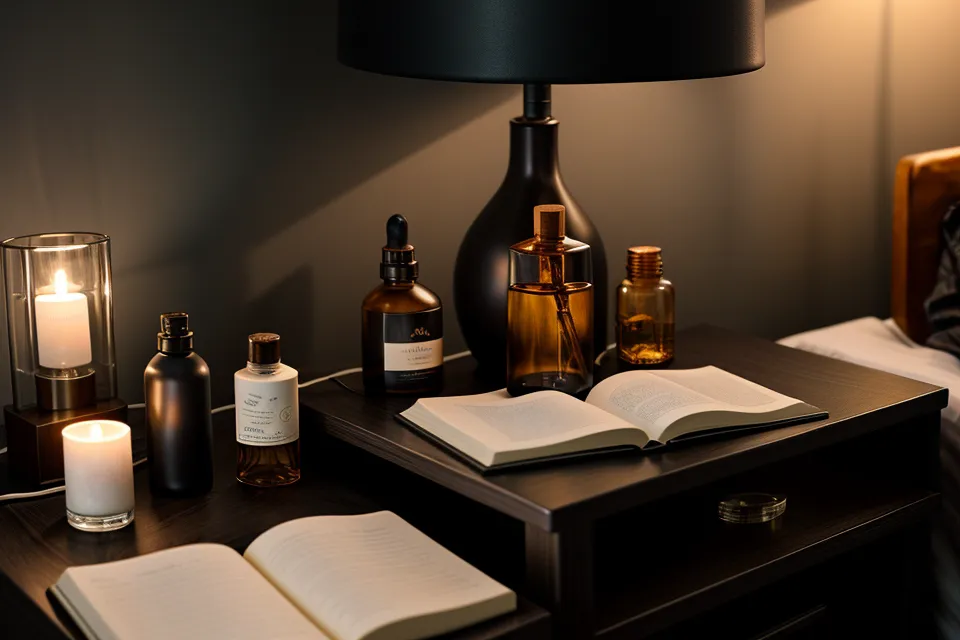
Here's the actual problem, separated from any brand name or dosage: swallowed capsules take real time to clear your stomach and reach your bloodstream, and that lag only gets longer when your nervous system is already wound up. Scent skips that queue completely — it reaches your brain before a capsule's even started breaking down. If you're lying there at midnight still wired, popping another magnesium or theanine capsule doesn't fix that, because the problem usually isn't a missing ingredient. It's that nothing fast-acting has reached your system yet to signal the shutdown.
I learned that the slow way with magnesium oxide — the cheap tablet form sold in the vitamin aisle of basically any grocery store. I took it on schedule for three weeks and logged exactly nothing: no change in how fast I fell asleep, no change in how often I woke up. Different magnesium compounds apparently behave differently once they're in your system — that's a comparison for another time — but the lesson that stuck was about speed and delivery, not ingredient choice.
Scent doesn't replace a supplement that already works for you. It just closes the gap while that supplement is still working its way through your gut.
This isn't medical advice. I'm an operations guy, not a clinician, so if you're on prescription medication or manage a respiratory condition, loop your doctor in before layering an aromatic on top of anything you already swallow.
Why Dabbing Lavender Oil Directly on Your Skin Backfired
The standard advice online says to dab a few drops on your wrists, temples, or pillowcase before lights-out. I tried it exactly as written, more than once, before admitting it wasn't working.
Instead of settling down, I felt oddly keyed up. The concentrated scent sitting right under my nose became its own kind of stimulus.
Every inhale pulled my attention straight back to the surface, like getting tapped on the shoulder every couple of minutes to ask if I felt calm yet.
There's a name for this: olfactory sensitization. The short version is that something that strong held right under your nostrils all night can put your senses on alert instead of winding them down. I don't need the long version to act on it: close-range lavender made things worse for me, not better.
Swapping from skin contact to a diffuser across the room fixed it. Same oil, same bedroom, completely different outcome. This tells you the oil wasn't the variable. Distance was.
What Counts as Real Lavender Oil (And What Doesn't)
Most of what's sold as a "relaxing" scent in a grocery aisle is a synthetic fragrance blend: manufactured aroma compounds with no actual plant behind them. In my experience, synthetic blends don't calm anything; they just give me a mild headache and leave my sinuses irritated.
What you actually want is essential oil pressed from genuine Lavandula angustifolia, sometimes labeled English or true lavender. The two compounds usually credited for its reputation are linalool and linalyl acetate. Check the label for the Latin species name rather than trusting a candle-aisle description like "lavender scented."
One hard line worth drawing here: standard aromatherapy oil is for the air, never for your mouth. Dropping raw essential oil into water or an empty capsule can burn your throat or stomach lining on the way down, plain and simple. If you want to try ingestible lavender, that means a specific pharmaceutical-grade, enteric-coated softgel made for oral use, not something you assemble yourself from a bottle meant for diffusing.
If the thing keeping you up isn't your bedroom air at all but your own head replaying the same three thoughts on a loop at midnight, that's a separate problem scent alone won't solve. I got into what actually helped with that angle in my Best Lemon Balm Extract for Calming a Racing Mind Before Bed notes.
Building a Nighttime Routine Around Your Supplement Stack
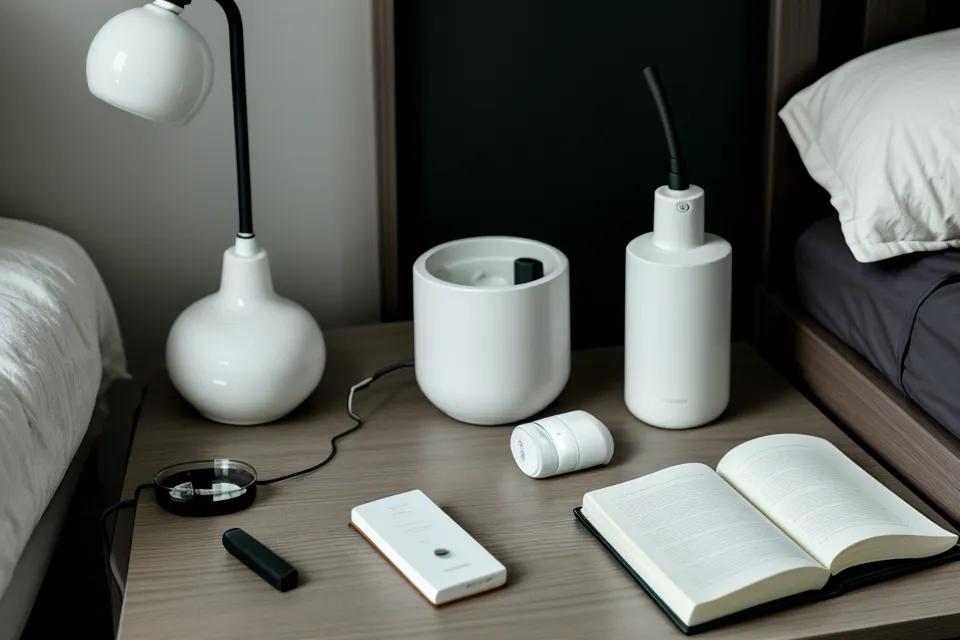
Getting scent and supplements to work together means treating bedtime like a sequence instead of one single moment. Firing every intervention at once, right as you climb into bed, gives none of them enough runway to do anything.
Start with the room, not yourself. Roughly forty-five minutes before you actually plan to sleep, run an ultrasonic diffuser on a dresser or shelf across the room (not on the nightstand, not anywhere near your pillow) with three or four drops of genuine lavender oil in the reservoir, then shut the door and leave. The goal is an even, faint background scent by the time you walk back in, not a cloud sitting directly over your face.
Take your supplements inside that already-scented room, roughly half an hour out from lights-off. My own baseline is plain: magnesium glycinate alongside a standard L-theanine dose, nothing exotic. Swallowing capsules in a space that already smells like wind-down time seems to build an association with repetition. The scent becomes the cue, not just background air.
In the last stretch before sleep, dim the lights and put the phone down; the diffuser keeps running in the background, which helps keep stray thoughts about tomorrow's to-do list from taking over.
Once you're actually under the covers, turn the diffuser off or let its built-in timer cut it. You want the scent to help you fall asleep, not sit in the room all night and leave you stuffy by morning.
How reliably that whole sequence works depends a lot on your climate. A stuffy, humid bedroom fights a diffuser's output very differently than a dry one does. I put together separate notes on adjusting for that in my Best Natural Sleep Aids for People Living in Hot Humid Climates piece, if your situation calls for it.
This is really just one piece of a broader wind-down routine (dark room, cool temperature, consistent timing) with scent layered on top, not a replacement for any of it.
The Tracker Numbers After Fixing the Timing
Going by what the tracker shows, the pattern that stands out most is how fast the lights-off-to-asleep stretch shrank: from an inconsistent forty-five minutes some nights down to a steadier fifteen or twenty. Middle-of-the-night wakeups dropped too, from two or three on a rough night to one, if any.
The smartwatch still buzzes once every morning with a short, dull pulse against the wrist, dropping in a score before I've even opened my eyes. I've started reading it the way some people check a stock price, not as gospel, but the trend line is hard to argue with.
Driving to work one ordinary morning, I passed the regular Dunkin' on my route and didn't think about it at all: no scanning the drive-thru line, no internal debate about whether I needed the extra caffeine to function. That reflex had run on autopilot for years, and it just wasn't there anymore.
None of this works like a fix you apply once. Sleep debt behaves a lot like a backlog of deferred maintenance at work. You don't clear years of it in one weekend no matter how many tools you throw at it, and anyone promising an overnight turnaround is selling something. The realistic version is a handful of small, boring systems (supplement timing, scent timing, a consistent room setup) all nudging the same direction instead of one capsule doing the work alone.
I've tracked deep sleep percentages against specific formulations elsewhere too, including in my Best ChronoBoost Pro Review: Does It Improve Deep Sleep Patterns? notes, if that side of the data interests you more than the scent side does.
Lavender oil isn't a replacement for anything already in your supplement stack, and it's not going to out-perform a form of magnesium that already works for you. What it's good for is closing the gap between swallowing a capsule and actually feeling it: the stretch of the night where most people just lie there waiting.