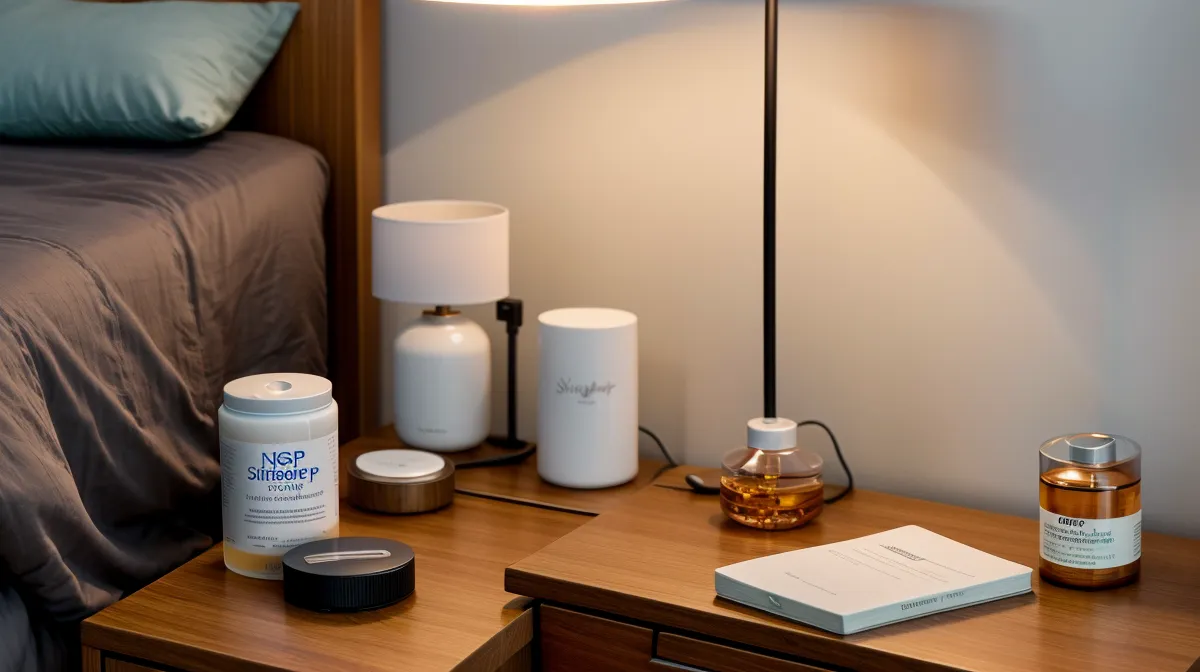
Three bottles are lined up on the shelf in my spare-bedroom office right now, and only one of them has stayed part of my regular sleep tracking routine instead of landing in the drawer where expired fish oil goes to die. That's become my real test for any natural melatonin supplement marketed at men's sleep health: not the packaging, not the marketing copy, just whether I kept reaching for it once the novelty wore off.
Quick disclosure before anything else: I run on affiliate links, so if you click through to a sleep supplement named here and buy something, I earn a commission at no extra cost to you. I track my own stats on a smartwatch and in a paper notebook, and I'm an operations manager with a stubborn streak — not a doctor, so none of this replaces an actual physician's opinion.
Direct-Dose Melatonin Was the Wrong Move for a Guy My Age
For about fifteen years I treated sleep like a line item I could cut whenever the quarter got busy. I was the guy who showed up before the sun, drank coffee until my hands shook, and told anyone who'd listen that four or five hours was plenty for a man who knew how to manage his time. It felt efficient. It was not efficient — it was just debt I hadn't been billed for yet.
My doctor eventually handed me the bill: climbing blood pressure, cortisol numbers he compared to "someone running from a bear." So I did what any overconfident project manager does when a system fails; I threw more resources at it. Drugstore melatonin, five milligrams, then ten, sometimes more before a bad week. The mornings after felt like my skull had been stuffed with wet cotton, and I was still jerking awake at odd hours anyway. Somewhere in that same stretch I also tried a pricey sleep meditation app (subscription, soothing narrator, the works) — used it four times, forgot the password, never logged back in. That's about the success rate of most quick fixes I've tried outside of an actual supplement.
Your body already runs a version of this process on its own — the pineal gland doesn't need you dumping a hormone megadose into your bloodstream to do its job; it needs raw material and a nervous system that isn't still handling a midnight fire drill. There's a longer version of that precursor-versus-direct-dosing debate elsewhere on this site, but the short version is this: handing your body a finished hormone and handing it the materials to make its own are two different bets, and I'd made the wrong one for years. I laid out a more detailed head-to-head on a stimulant-free formula built around that same idea in ChronoBoost Pro vs YU SLEEP: Which One Stops Late-Night Wakefulness?, if you want the full matchup.

Testing This Supplement's Actual Performance
I started testing YU SLEEP once the drugstore approach had officially failed, mostly because the label leaned on botanical and nutrient cofactors instead of a straight hormone dose. The instructions were simple enough — stick to the suggested serving, don't stack it with anything else — so that's exactly what I did.
The first handful of nights didn't look like much on my tracker: intermittent wakeups, restless shifts, nothing dramatic in either direction. Expecting an instant knockout here would set anyone up for disappointment. The shift showed up more clearly after close to ten days of consistent use, which lines up with what other people testing it seem to report — some feel a difference within the first week, others need the fuller stretch before it's obvious. Either way, the grogginess question, its own rabbit hole I've written about separately, resolved itself here. Mornings felt normal, not sedated. It also stayed under what I'd call my own non-habit-forming threshold: no sense that skipping a night caused any kind of rebound, which isn't something I can say about every bottle I've tried.
YU SLEEP, SleepLean, and the Metabolic Add-On Nobody Asked For
Across everything I've tested, SleepLean is the closest real alternative sitting on that same shelf. It bundles sleep support with metabolic ingredients and runs at a higher dose, which matters if late-night metabolic recovery is actually part of what you're solving for. For my specific problem — a nervous system too wound up to let natural melatonin production happen on its own — those extra ingredients were a feature I was paying for without needing.
What I liked about YU SLEEP by comparison is how narrow it stays: relaxation precursors, nothing bolted on for a goal I didn't have. If your target is long, uninterrupted stretches of slow-wave sleep rather than some broader recovery metric, that narrower focus is arguably doing more of the actual job. SleepLean is also the pricier bottle of the two, and it comes with fewer independent reviews floating around, which made me trust my own tracking data more than the marketing page on that one.
There's a third name worth mentioning here: a stimulant-free, three-in-one formula with its full ingredient list published up front — magnesium, GABA, L-theanine, chamomile, lemon balm, ashwagandha among others — even though the individual doses stay proprietary. My neighbor Gerald, who's borrowed my spare tracker for a full weekend before, ran that one for a stretch and said the daytime energy claim mattered more to him than anything about falling asleep faster. It's a reasonable budget-minded option if a published ingredient list matters more to you than exact dosing transparency, and its money-back window is long enough to actually test the ramp-up period properly.
My Notebook Doesn't Lie, Even When I Want It To
There's at least one entry in my log where I made it all the way through a Tuesday night without once reaching over to check how much time was left — nothing special about the day itself, just the kind of boring, uneventful sleep that used to be rare enough for me to notice when it happened. My neighbor Felicia, who's cycled through about half of what's currently on my shelf, has sharp opinions about which ones earned their spot and which ones were just an expensive placebo, and we don't always land on the same answer.
The smartwatch sleep score is its own imperfect tool — I've gone deep on how much weight to actually put on that algorithm in another post — but the pattern across nights lined up with how I felt getting out of bed, which is really the only cross-check I trust. The 3 AM wake-up specifically is a different animal I've broken down elsewhere; this particular comparison was about staying asleep in general, not about one specific hour of interruption. And the compounding cost of ignoring bad sleep for years, the kind I racked up without noticing, is a topic heavy enough that it earned its own full write-up rather than a paragraph here.
Choosing Your Next Sleep Supplement
If your main obstacle is a nervous system that won't quiet down enough to let things happen on their own, the narrower botanical option is the one I'd reach for first; it does less, and less turned out to be exactly what my problem needed. If sleep is only part of what you're trying to fix, and you don't mind paying more for ingredients addressing a second goal at the same time, SleepLean is a legitimate answer to a different question than the one I was actually asking. The three-in-one, full-ingredient-list option sits in between: a reasonable middle ground for anyone who values seeing every ingredient on the label over knowing the exact dose of each one, especially if a longer order brings the per-bottle cost down enough to matter.
For the fuller rundown of everything else I've tested along the way, I keep a running list in My Tracking Notes: The Natural Sleep Supplements That Finally Silenced My Late-Night Ceiling Stares in 2026. None of these bottles fixed fifteen years of bad decisions overnight, and I wouldn't trust one that claimed it could. Handed the right raw materials and a nervous system that's actually allowed to power down, the body seems perfectly capable of handling the rest of the job itself.